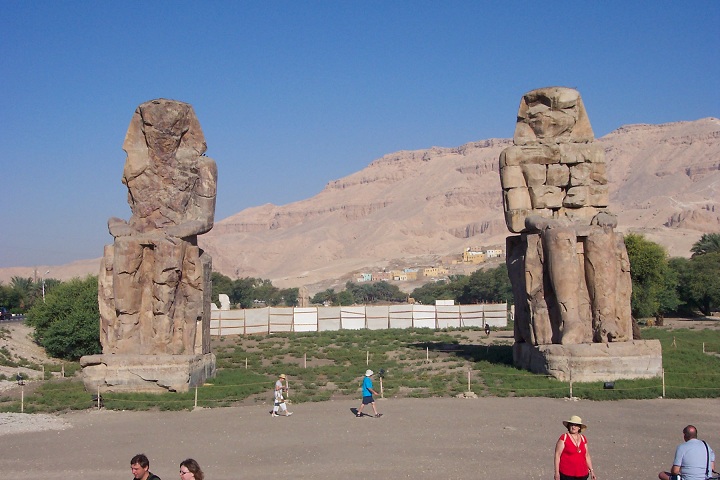
Lots to see today. Here are some older statues on the way to the valley
of the kings and queens.
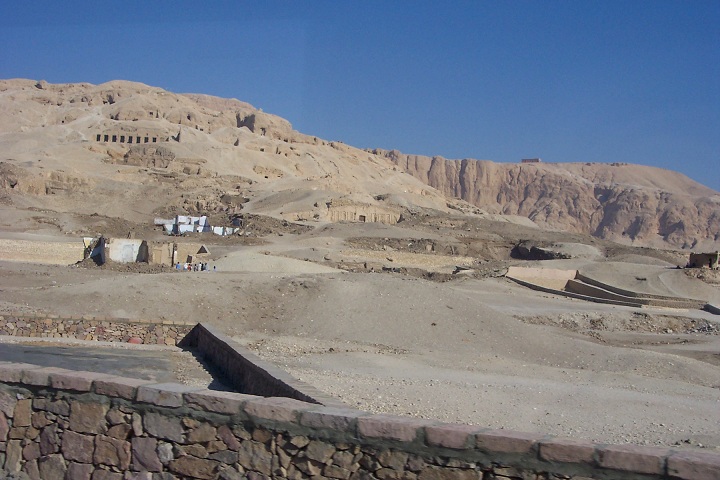
Other temples being excavated in the hills.
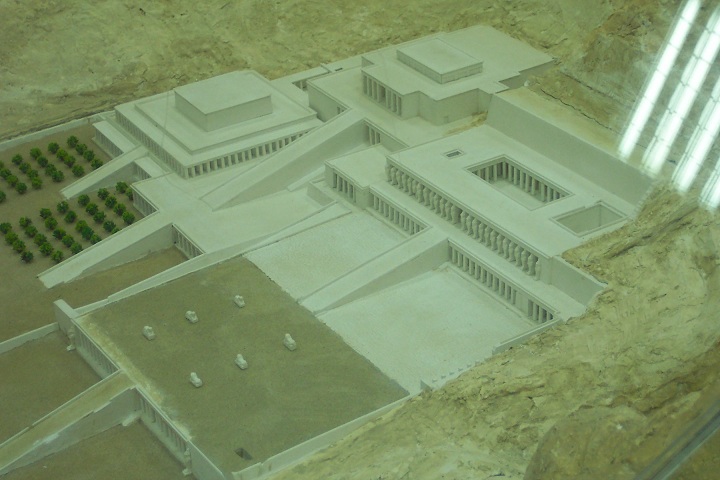
This is a picture of the model of the Temple
of Hatshepsut, the only female pharoah. I took it because from the
other angles, you cannot tell how large the courtyard is because it gets
foreshortened.
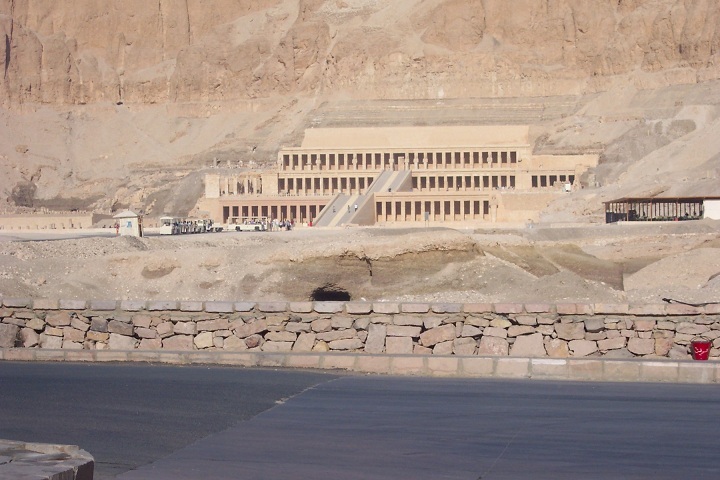
See, it looks like the three levels go straight up. Look at all of these
lovely stairs we got to walk in 110 degree weather.
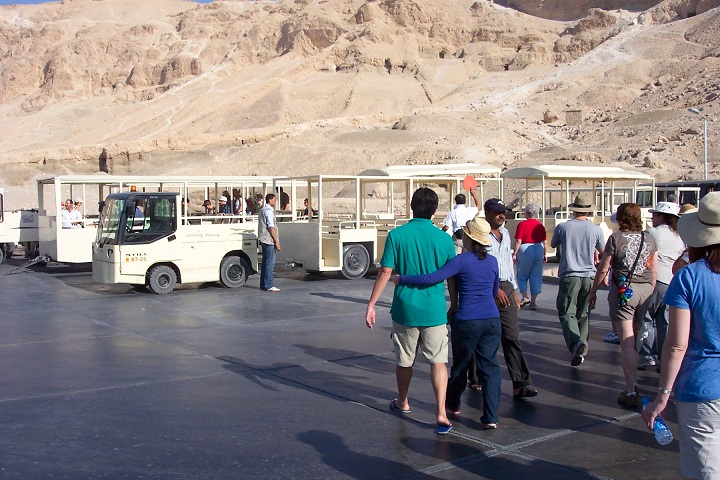
At least they have a shuttle bus out to the temple proper.
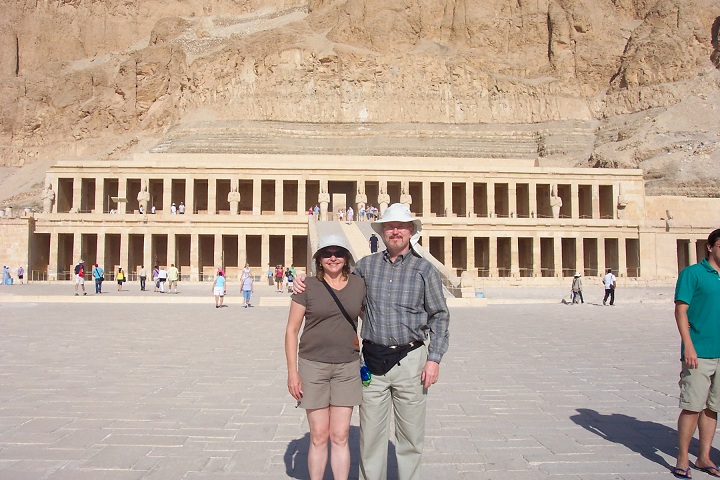
On the first-level courtyard looking back to the other two levels.
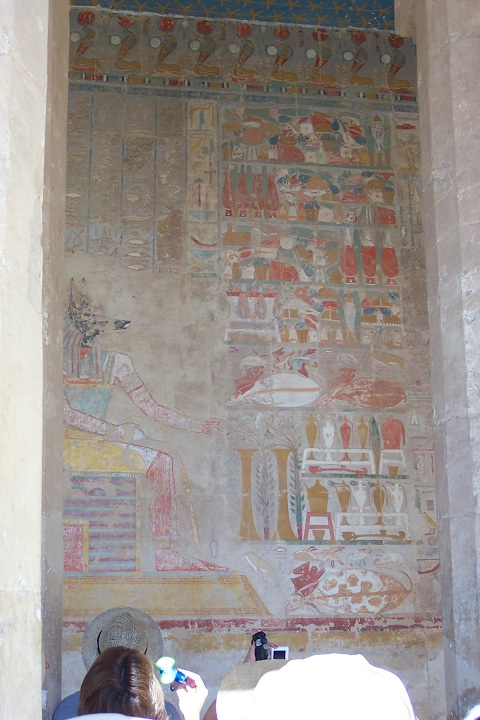
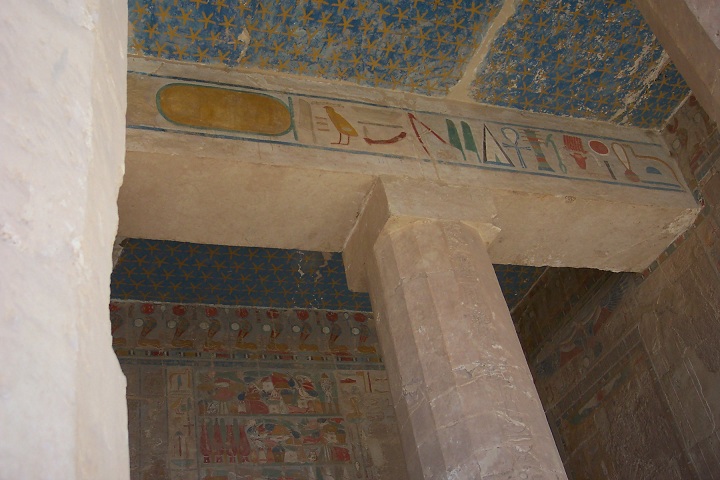
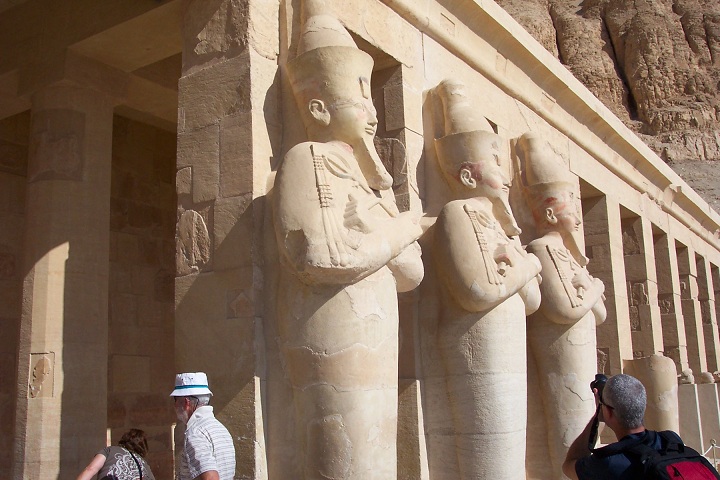
Because the temple is carved back into the cliffs, a lot of the color
has been preserved.
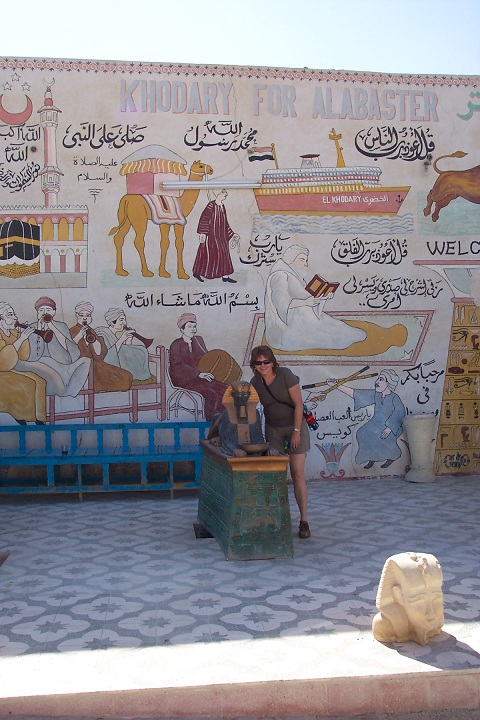
After the temple, a stop at an alabaster shop.
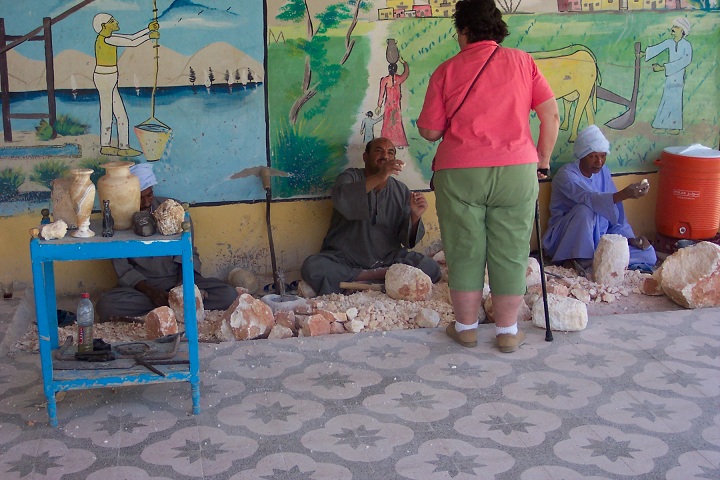
These three gentlemen get to demonstrate for the tourists how alabaster
is shaped the old way. The first guy on the left is chipping away a basic
shape for a vase, then the middle guy uses a huge brace and bit to drill
out the inside, then the third guy smoothes it with sandstone. Remember
how I said everyone has an angle: the middle guy offers you a "free
gift" of a couple of pieces of chipped alabaster, then as you leave,
he gestures that you are supposed to give him something in return. Most
people give him a dollar or a couple of pounds, which is pretty expensive
to buy rocks.
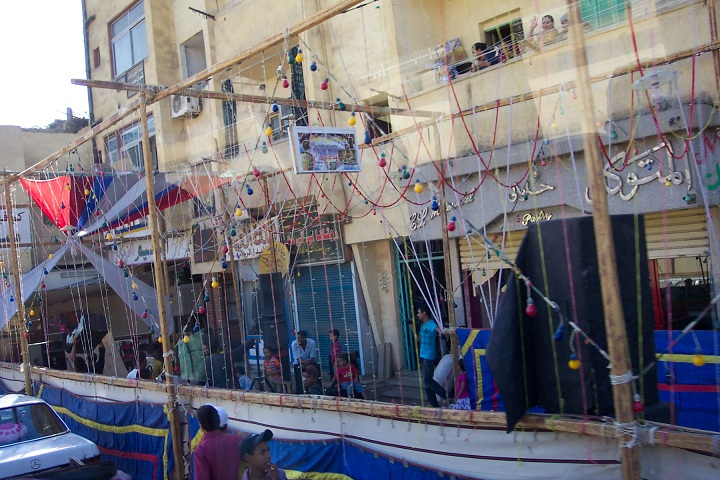
On the bus tour, we pass an open-air wedding celebration.
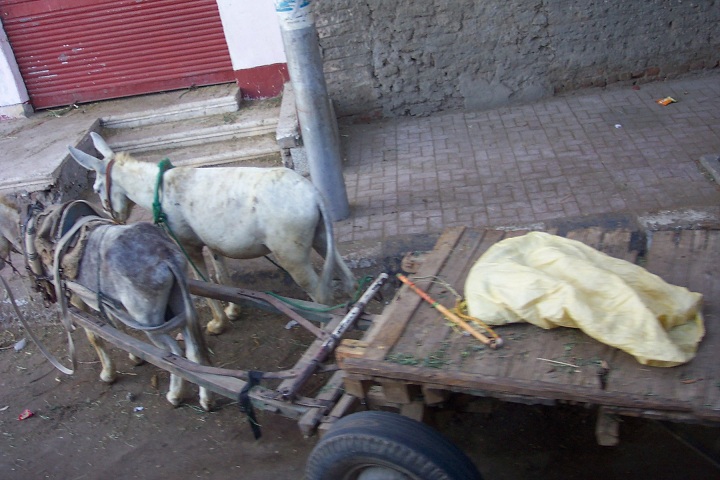
Miserable donkeys.
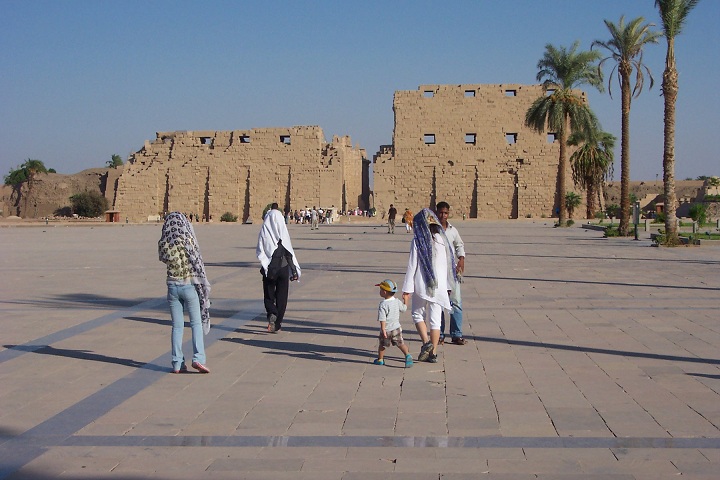
And we arrive at the Temple
of Karnak. It is the largest of the temples, built by Ramses circa
1300 BC.
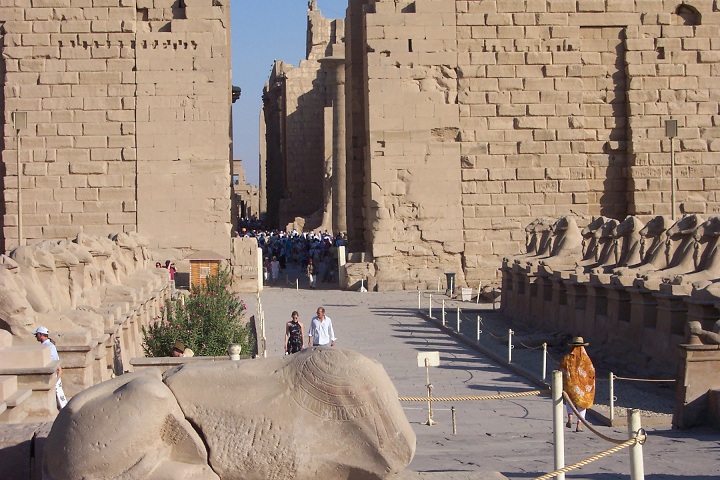
In the entry area, you can see pictures of how they found the temple,
and the gates on either side were just jumbled piles of stone that had
to be rebuilt. The first miracle is that Ramses could build this 3300
years ago. The second miracle is that they can put stuff like this back
together.
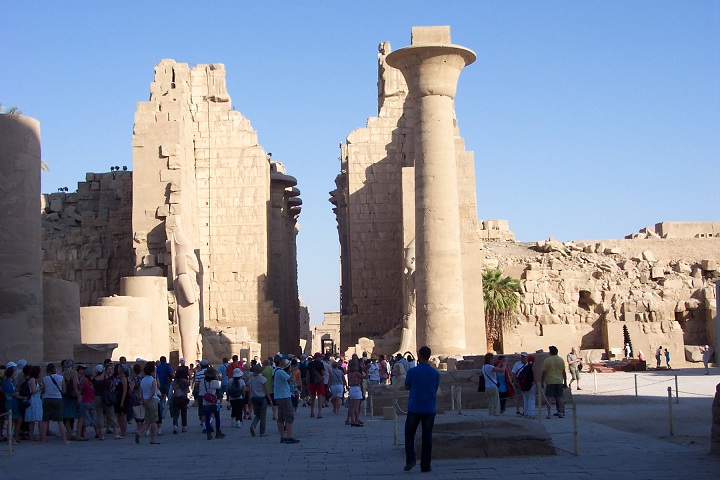
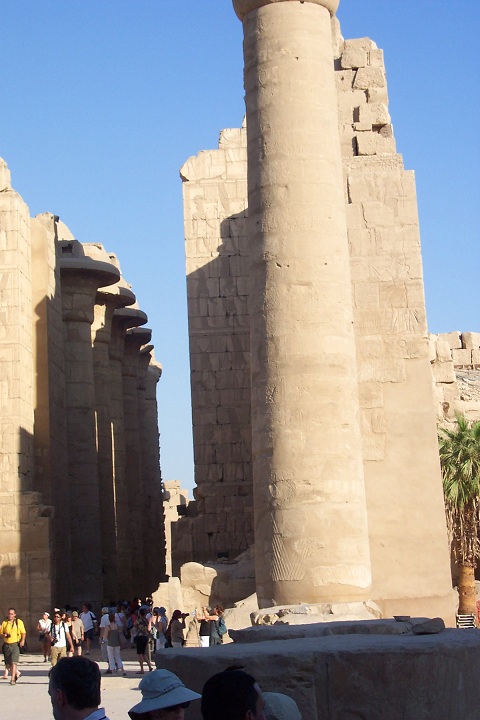
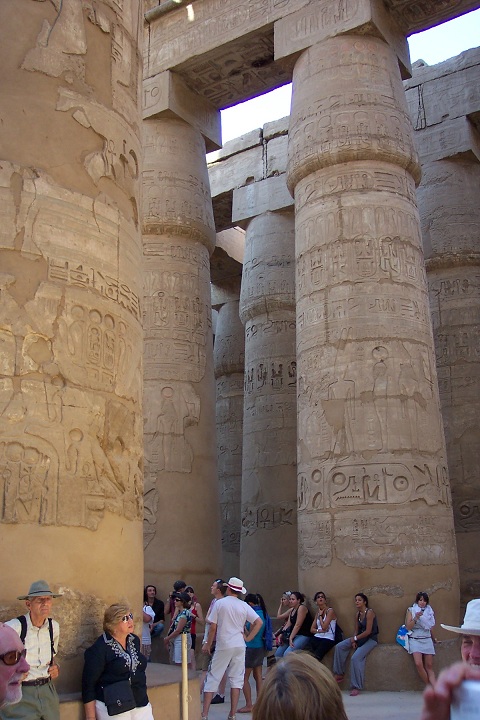
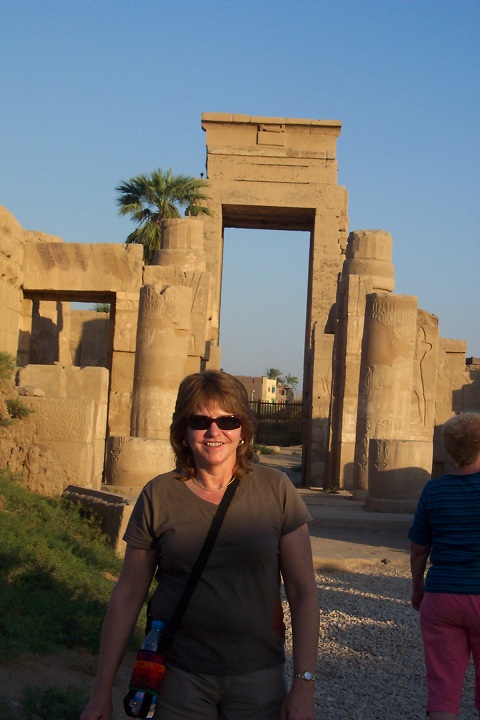
Look at the size of these columns.
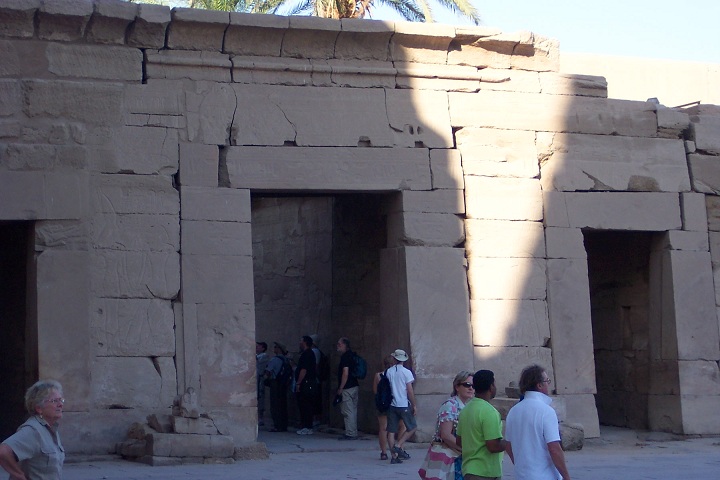
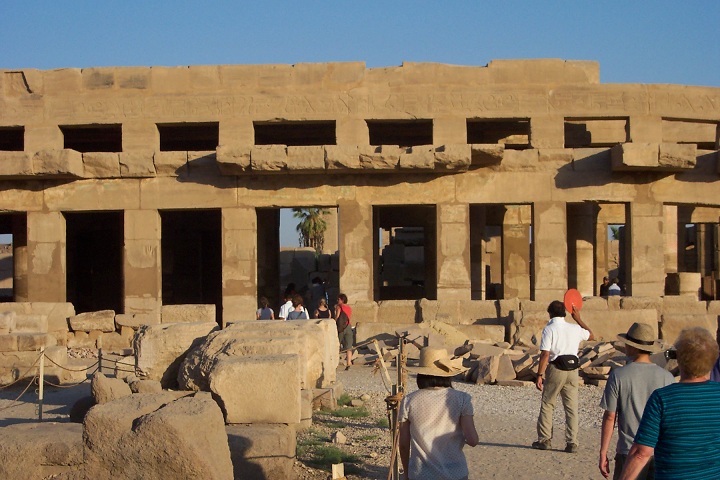
Small temples off the main courtyard.
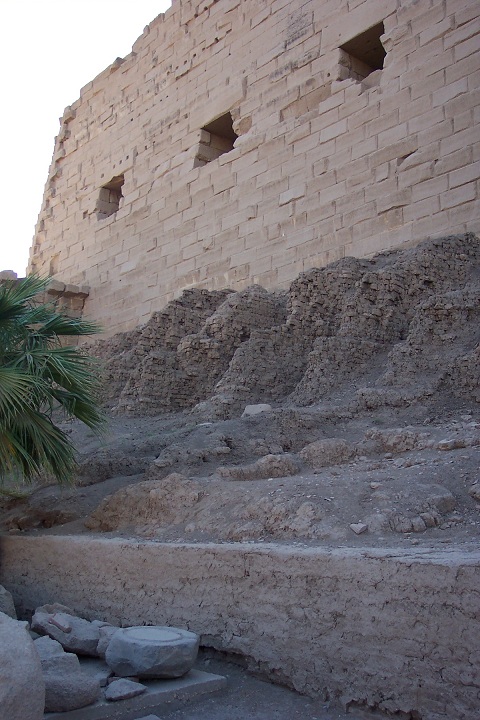
At the bottom of the back side of the main gate, you can find the stacked
brick that was used to build the ramps for stacking the stone. This gate
was actually unfinished. Note the absence of hieroglyphics: the normal
mode was to build up the ramps as they built up the wall, then start decorating
with hieroglyphics from the top down as they removed the ramps. This gate
was never finished, so there are no hieroglyphics and the ramps are still
in place.
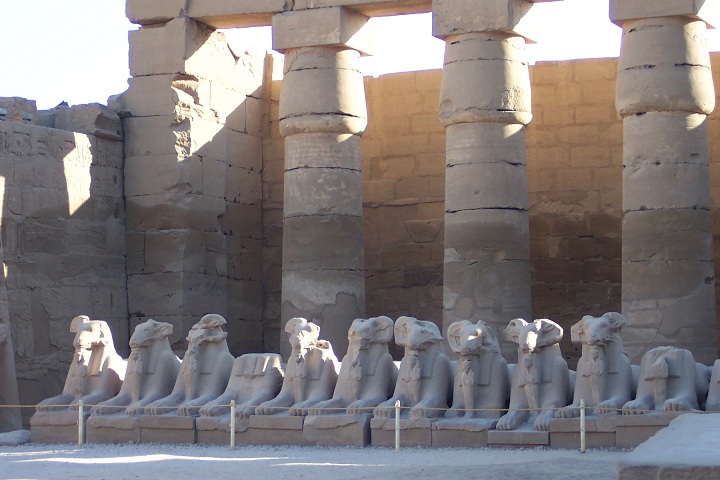
The first hypostyle hall.
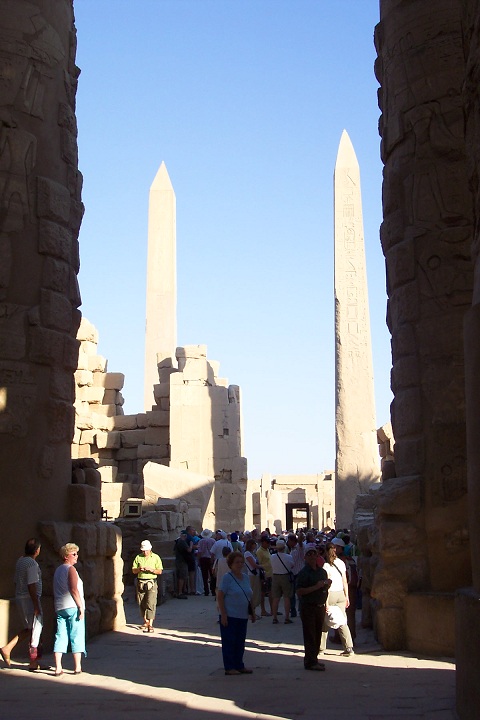
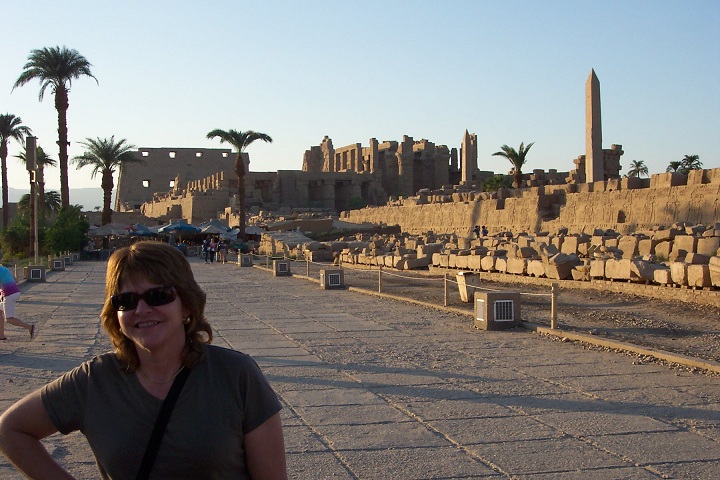
The largest obelisks uncovered. These are each a single piece of stone.
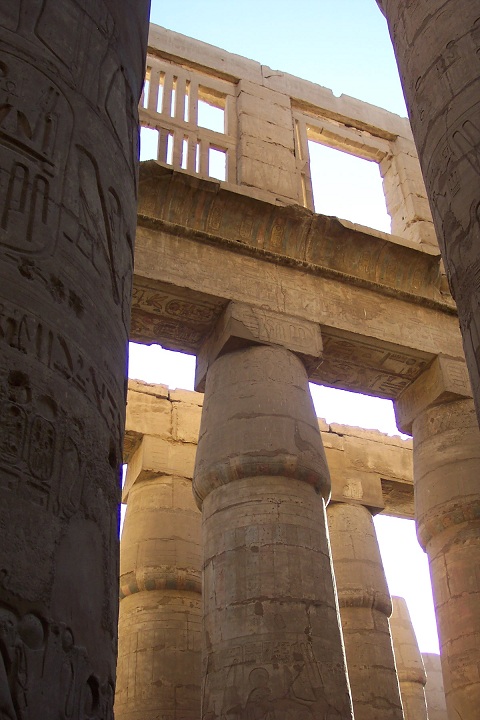
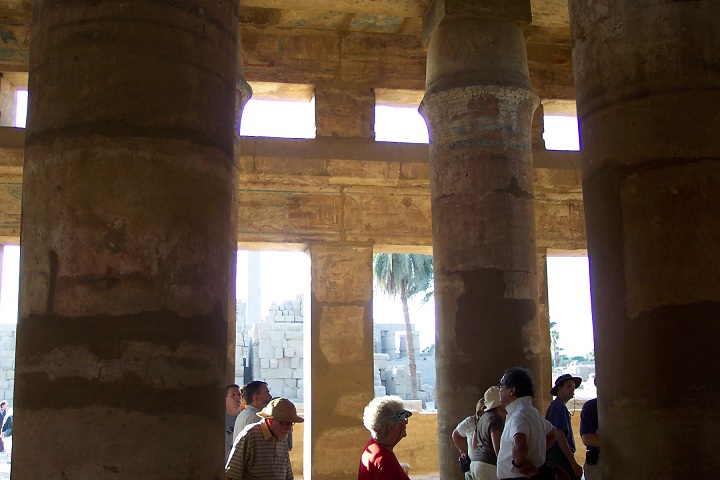
The second hypostyle hall.
The middle section of the roof is higher than the outer section of the
roof. These vertical sections allowed some amount of light and air to
enter the temple.
A failed attempt at getting some perspective.
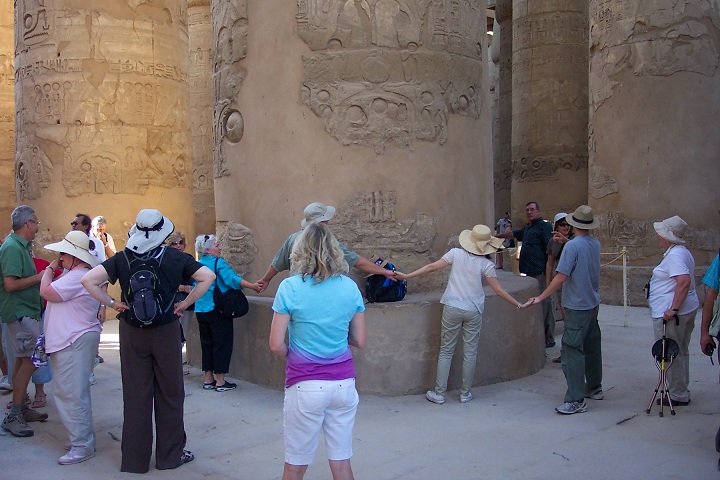
It takes ten members of our group to surround a single pillar.
And there are 134 of them in all.
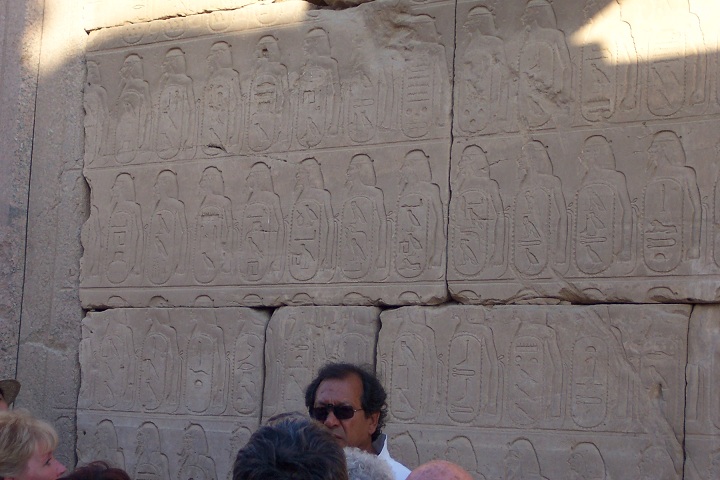
An accounting of the battles won by a significant general.
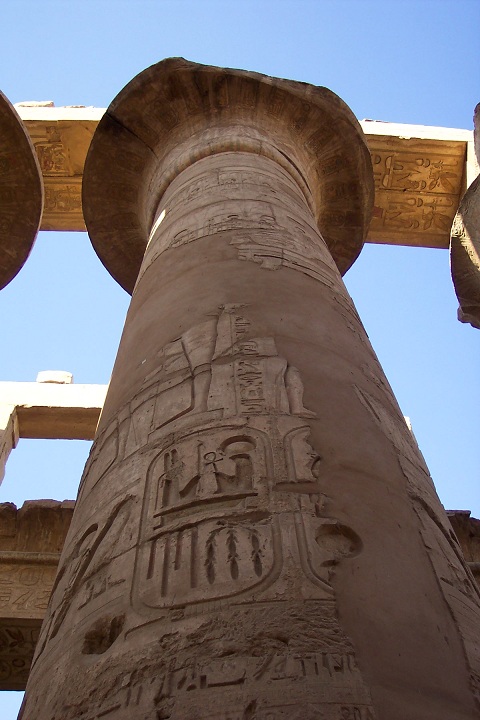
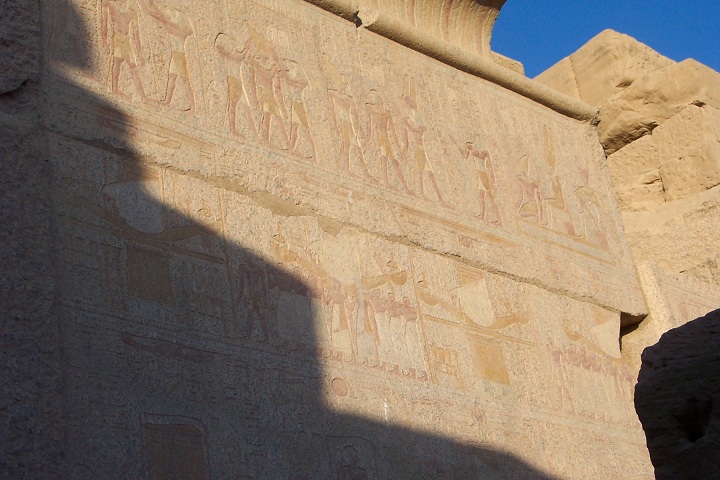
You can see the color preserved in many of the hieroglyphics.
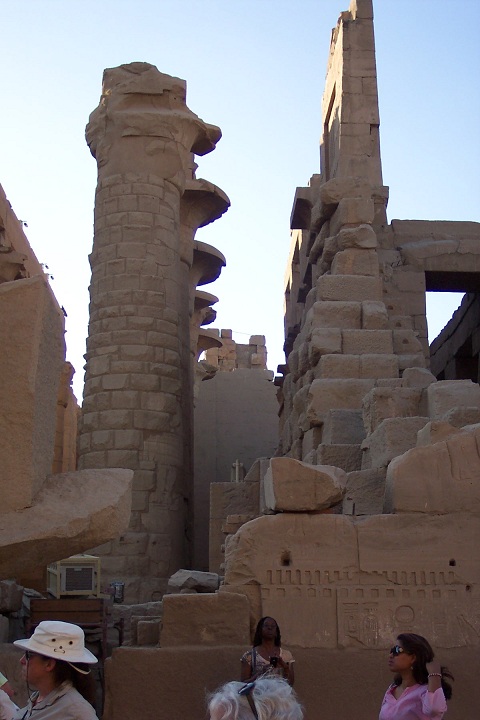
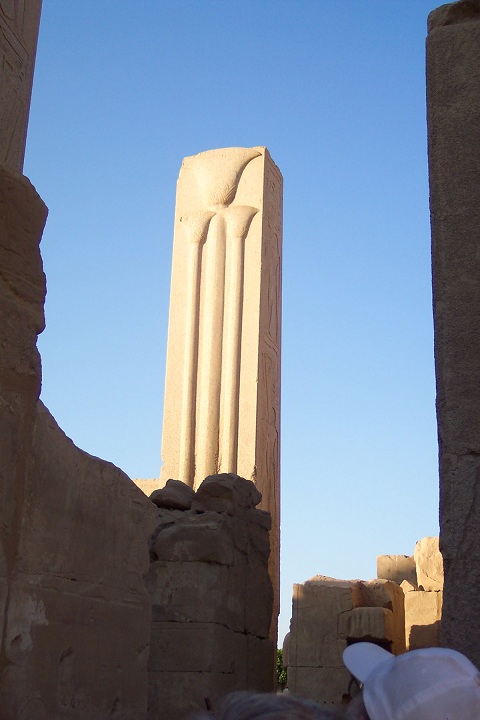
The lotus-flower tower.
This is a small temple behind the real temple.
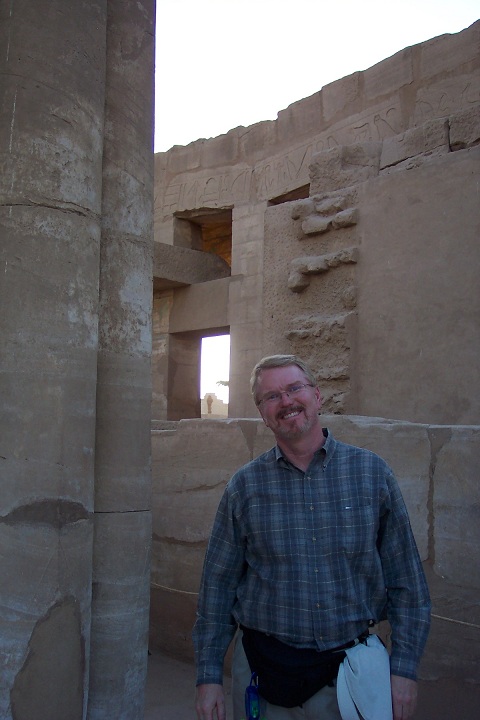
Fanny pack? Check. Water bottle? Check. Hat on belt? Check. Battery-powered
fan? Check.
Water bottle? Check. Sunglasses? Check. Battery-powered fan? Check.
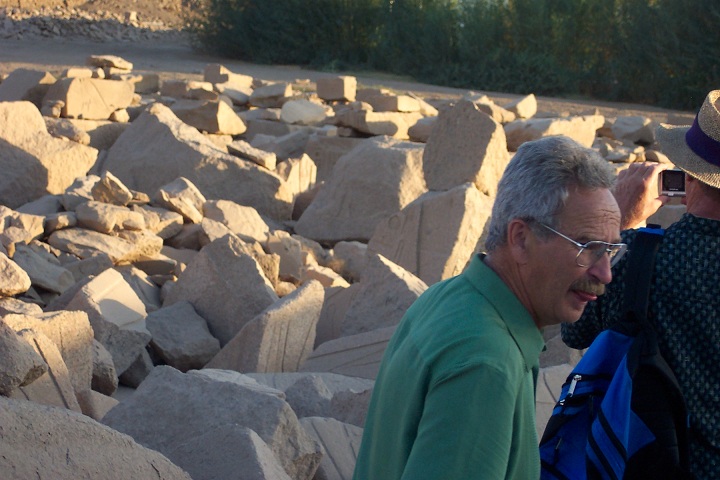
The is the "garden" of the pieces that they are still trying
to figure out where they belong.
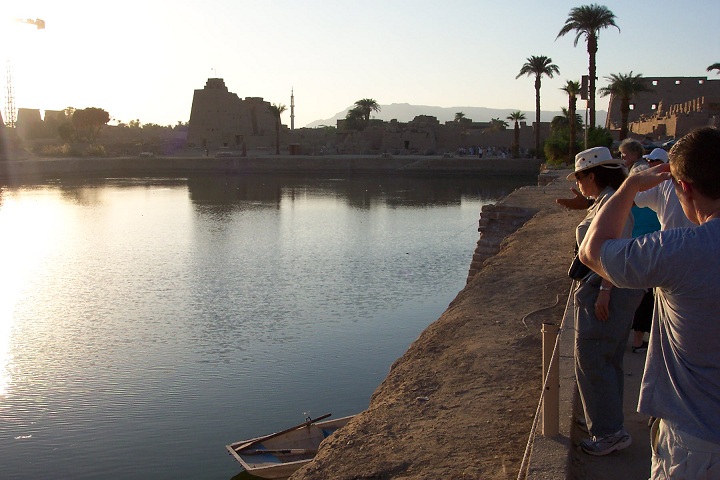
This is the temple man-made lake. Think Washington, D.C. reflecting pool.
Making our way back lakeside.
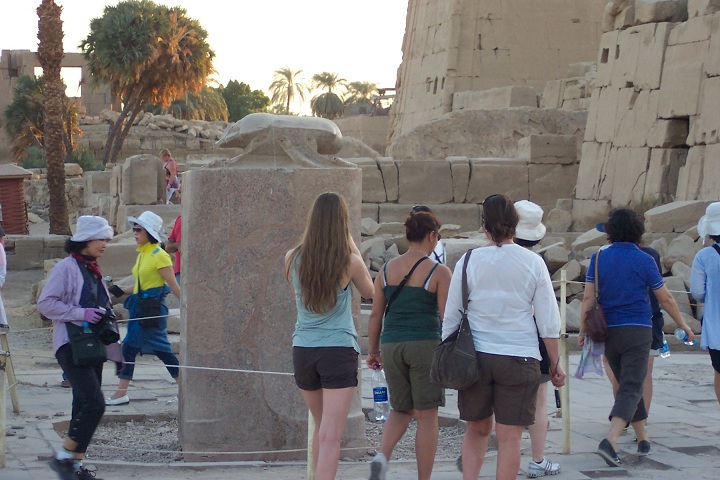
The scarab beetle is the symbol of good luck. Here are people making
the customary seven laps around the scarab to get what they wish for.
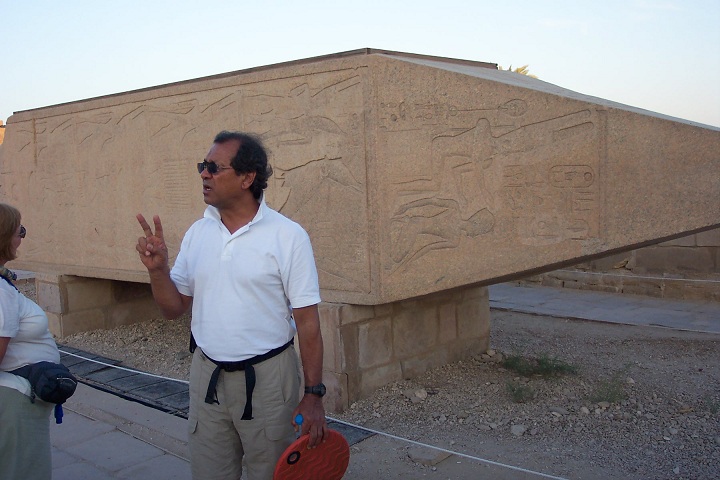
Note here how the top of the obelisk is always smooth. This is because
it was coated with gold to reflect the sun's rays.
"What do you bid for this fine piece of obelisk? OK, I have two.
Two. Do I hear three?"
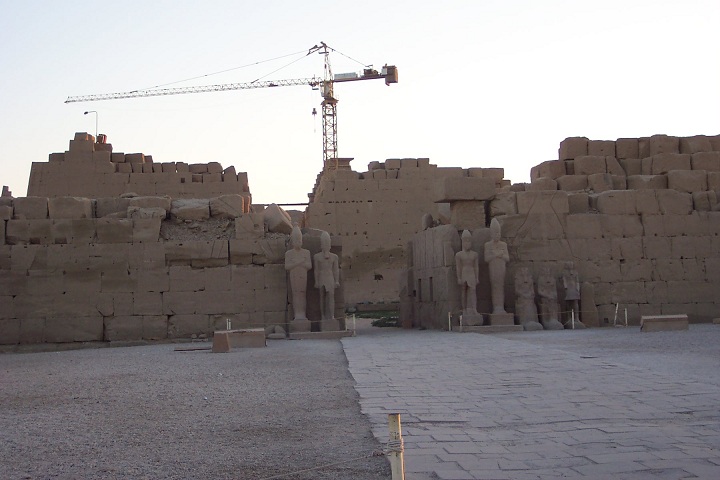
Atef assures us that this crane has never moved it all the trips he has
made here. Still, better to reassemble these structures with it than without
it.