Our optional tour
today is called, "In search of Hansel and Gretel." Kimberly already
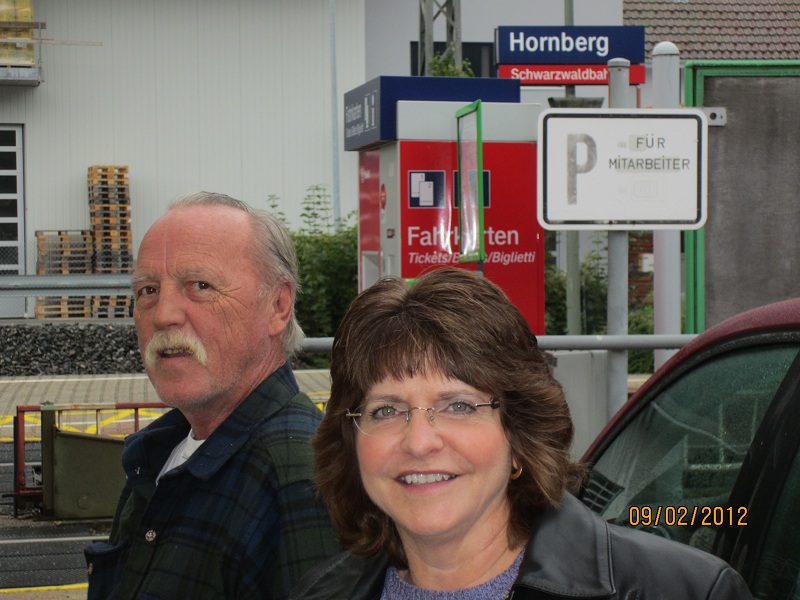
found Hansel. Here we are waiting for the Black Forest Railway to take us
from Hornberg to St. Georgen.
Here comes the train now. It is almost two minutes late; we are shocked.
The train's claim to fame is that it ascends several hundred feet without
every going above 3% gradient, and it goes through 39 tunnels.
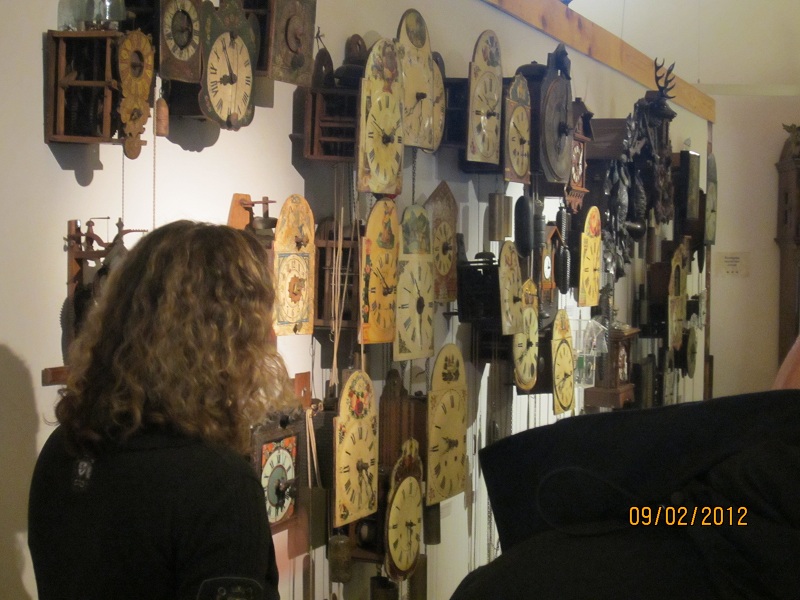
The bus meets us in St. Georgen, and takes us to the Bavarian museum
to learn even more about the history of cuckoo clocks. Darrolyn stayed
to see about the player pianos and other clockwork machines.
Kimberly and Hans and I got bored and headed out. We hiked up to the
observation point for the highest waterfalls in Germany.
What a dashing young man.
We must have hiked at least 1/2 mile, so we are starved. We must have
picked the right place to eat, because our tour guide and bus driver show
up right after us and eat here as well.
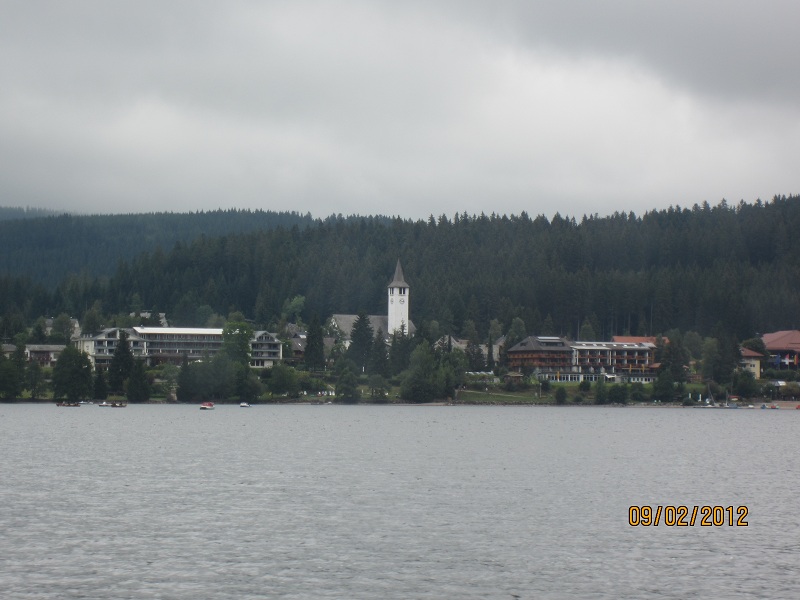
The afternoon takes us to the Titisee ("See" means "lake").
We hop on a little electric boat here for a cruise around the lake.
See? Titties?
There's not a lot to see here. This appears to be a place that Germans
go to vacation, not really tourists.
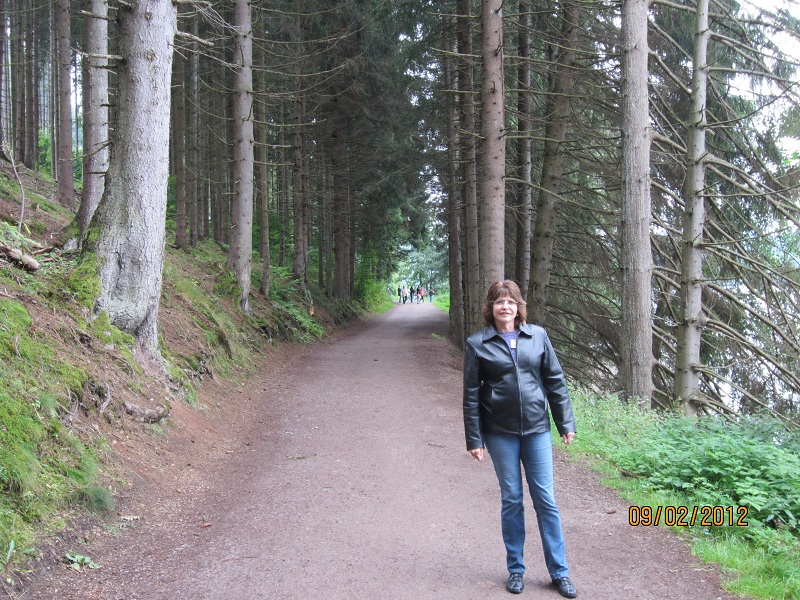
We had some time to kill, supposedly in the shops. Kimberly and I were
aching for some exercise, so we hiked 1/3 of the way around the lake and
then came back. We had a little scare when we got back to the bus, because
we were missing Hans and Darrolyn. Evidently they took a bad turn on the
way to the bus, and overshot it. They had to ask a local for a phone,
and then found out the emergency number we had was wrong. We finally located
them, but Hans was not amused.
This evening we have the "Be My Guest" dinner, which is meant
to be a chance to interact with the locals. Our bus takes us out into
the country, and we are trying to guess which house we'll be eating dinner
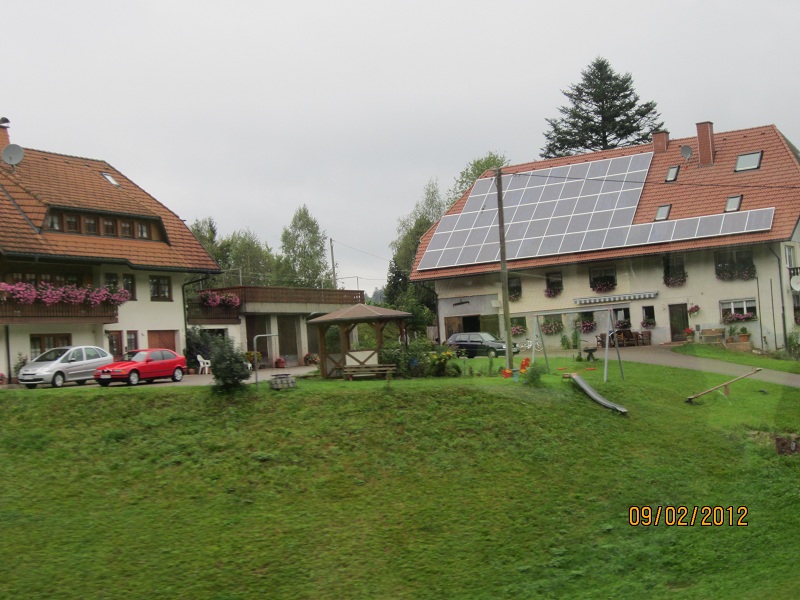
at. This is not it, but I thought I should point out the prevalence of
solar panels on a lot of houses, and even solar farms as adjuncts to regular
farms. The Germans also get 8% of their power from windmills, which dot
the landscape all over.
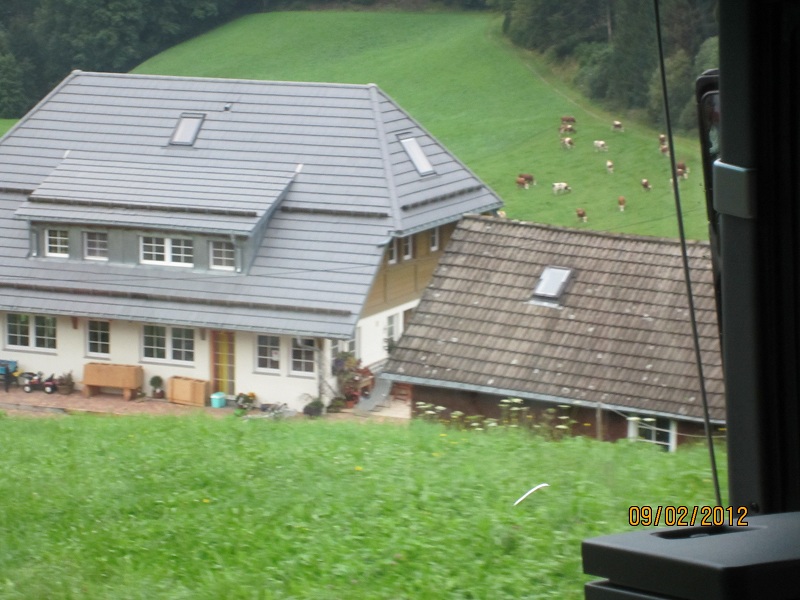
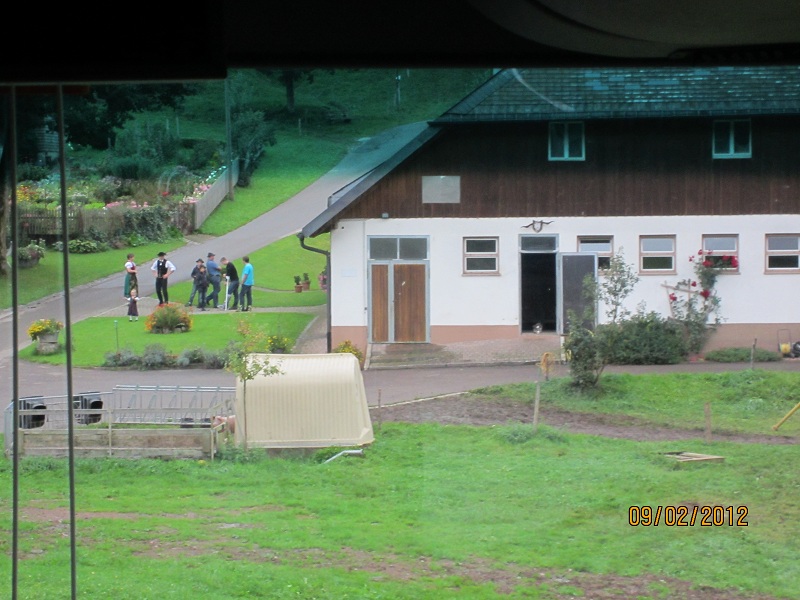
This also is not the house, but you can see that it is a working farm.
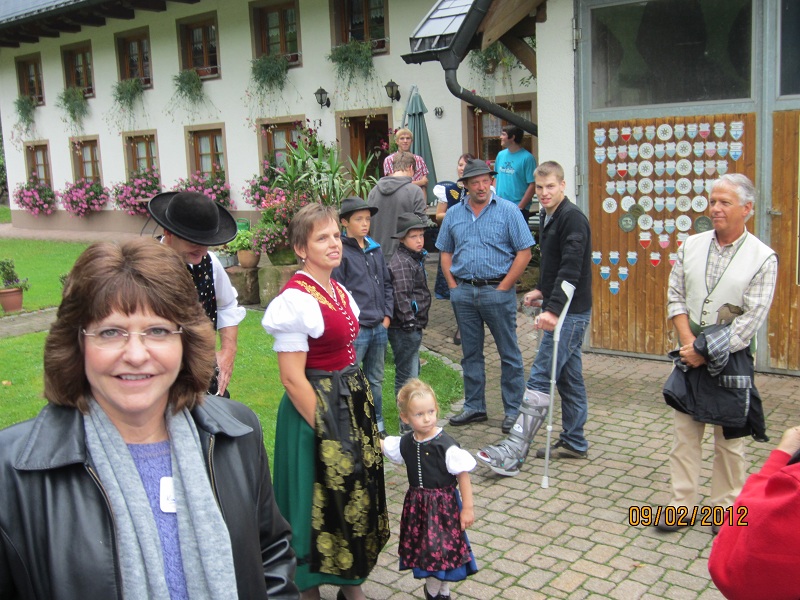
Here's the house, with our locals in traditional dress, out to welcome
us.
The man in the hat is the farm owner, but he doesn't speak much English.
His wife does alright, and Noel the tour guide interprets for us.
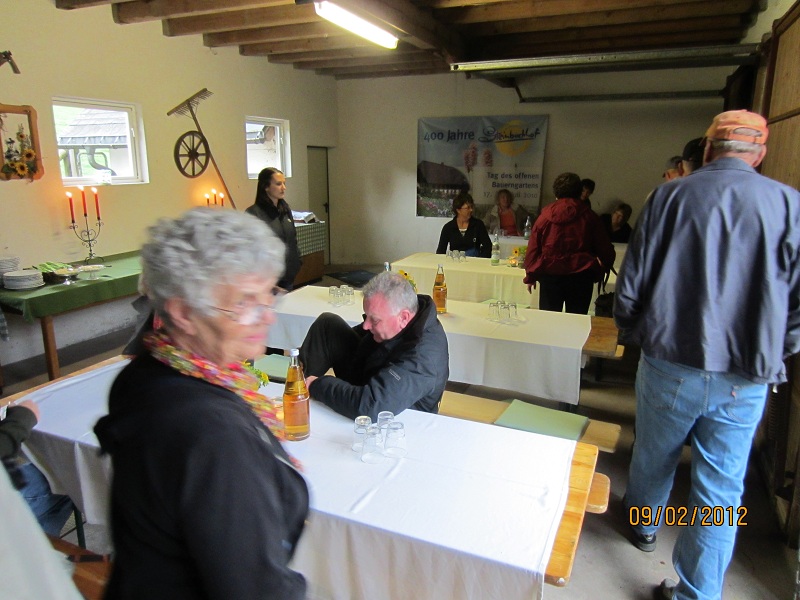
Dinner is in the garage, which has been converted for hosting these types
of meals.
On the right is the older daughter, who lived in Australia for six months,
so she speaks English well. The little girl is the youngest daughter,
who pretty much stole everybody's heart.
The farm has been in the same family for about 500 years. The pigs are
replaced frequently, however.
It is a working dairy farm, and here are some of our cattle.
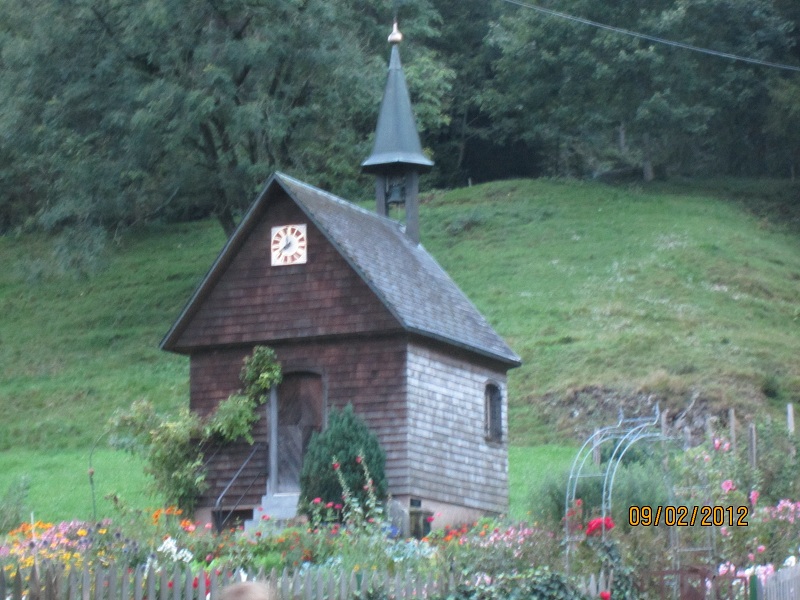
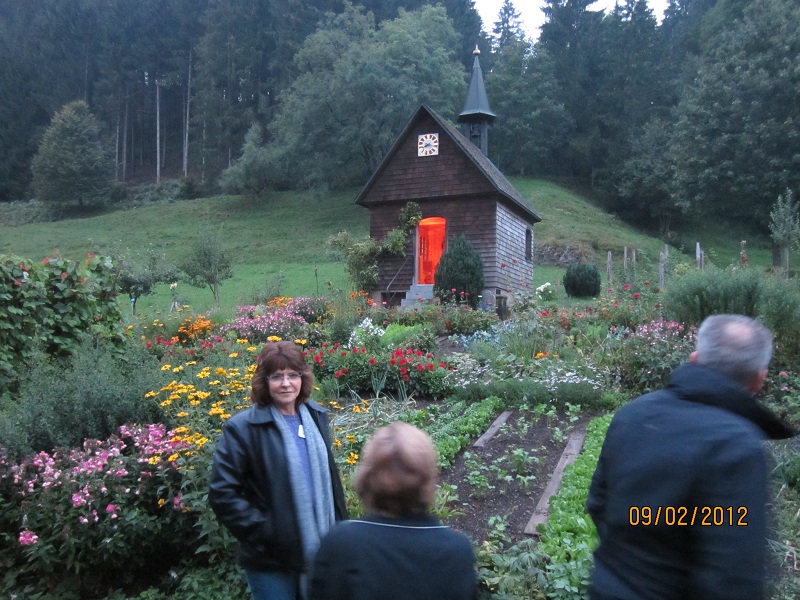
There is a little chapel out in the garden, but it is only 200 years
old.
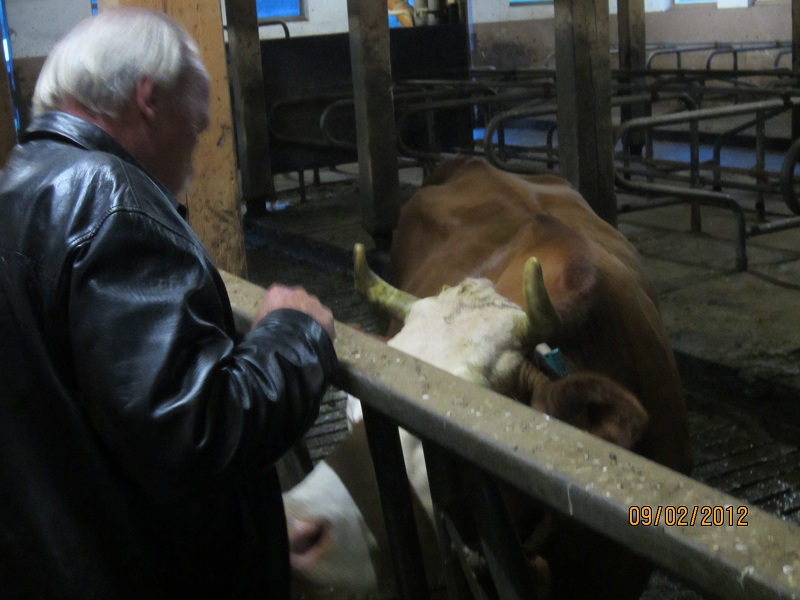
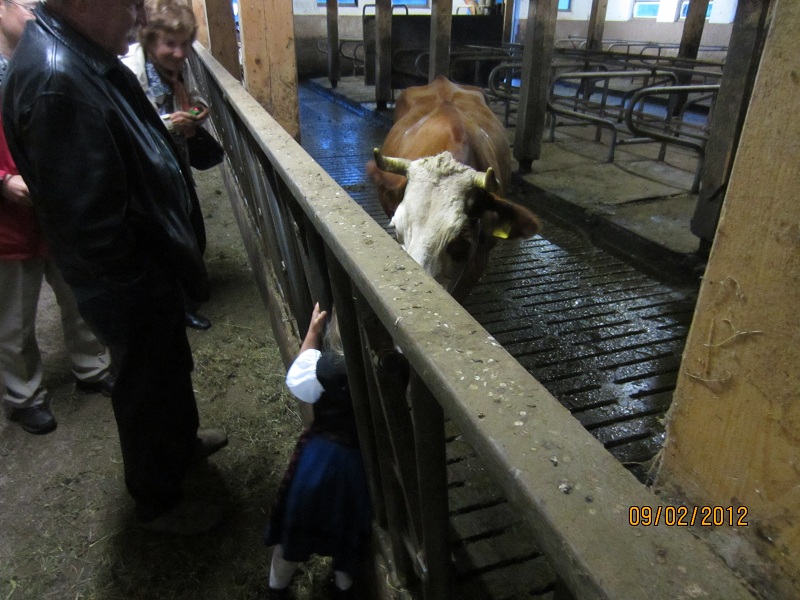
Here we are in the barn meeting the cows.
Hans with his new friend.
And the little girl playing with the cow.
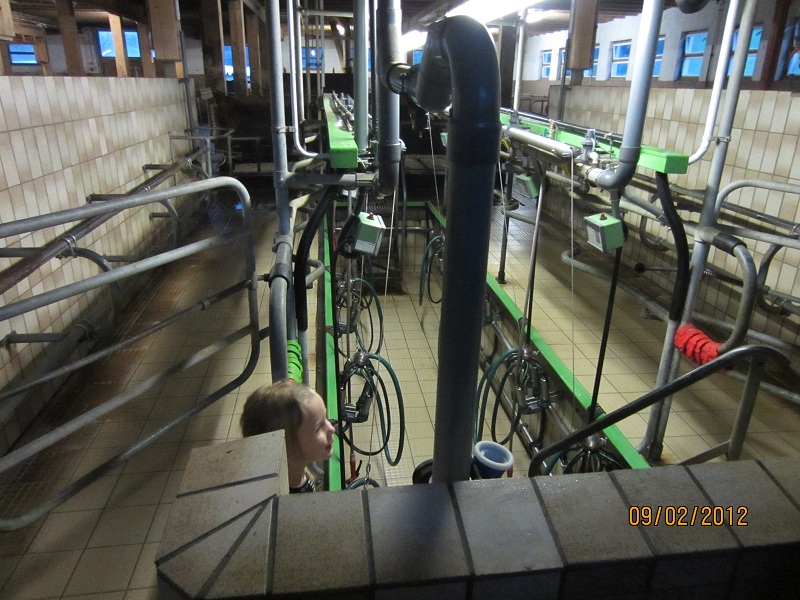
We aren't Luddites or anything. We do use automated milking machines
for collecting the milk. Dairy is only one-third of the farm's income,
and is supplemented by these visits, forestry, half-ownership of a windmill,
and a bed-and-breakfast in the main house.
Here's the chapel at sunset.